Bernese Mountain Dog Photography: The Tri-Color, the Scale, and the Warmth
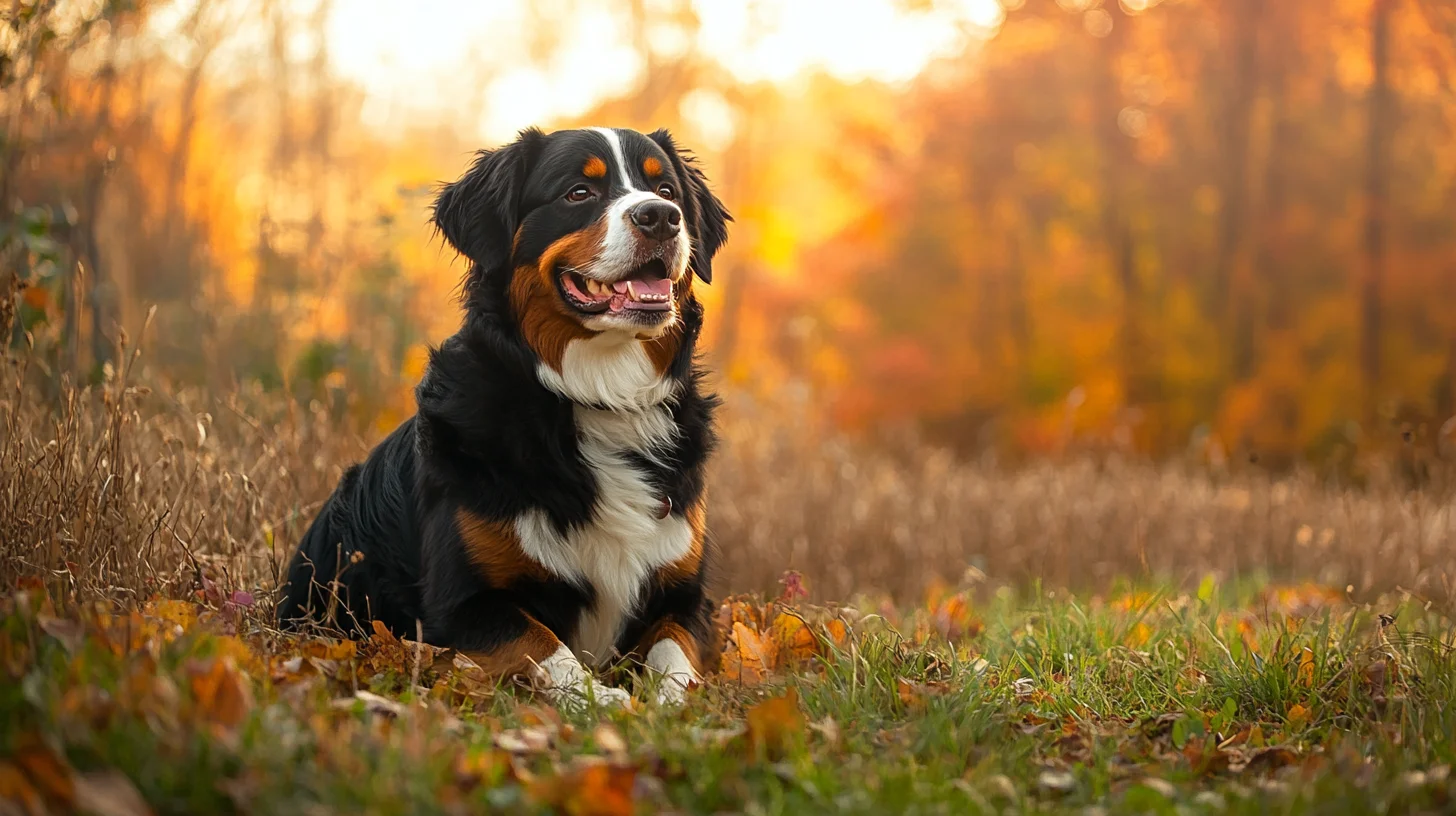
Bernese Mountain Dogs are among the most visually striking subjects in dog photography. The tri-color coat — jet black, crisp white, warm rust — is a natural composition tool. The large size, the gentle expression, and the characteristic markings make every portrait immediately recognizable. When the light is right, a Berner in autumn foliage is one of the most extraordinary images I make.
I've photographed Berners across all four seasons on the South Shore, and there's a clear hierarchy of when they look their best. Fall is by far the peak season — the rust markings and the black-and-white chest pattern seem designed specifically for October foliage. But even in other seasons, the breed's natural dignity and the visual impact of that coat make for compelling work. The technical challenges are real, but they're solvable with the right approach to light.
The Tri-Color Coat — Exposure and Light
The challenge with Berners is the exposure range of the coat itself. The jet black regions and the bright white blaze are three stops apart — a range that exceeds what most cameras can capture perfectly in a single exposure without losing detail in either extreme. This is one of the most technically demanding coat types in dog photography, and getting it right requires understanding both the lighting and the metering.
The solution I use is to expose for the white markings and let the black fill naturally, then use backlight or rim light to separate the black areas from dark backgrounds. When the white blaze is correctly exposed, the black areas still have detail visible — they read as deep, rich black rather than blown-out darkness. But if I expose for the black areas, the white blaze overexposes and the chest marking loses all detail.
Morning side-light works better than direct overhead noon light, which collapses the coat into flat shadow in the black regions and blown-out blaze on the white chest. Golden-hour light from the side creates a specular quality on the longer outer coat hairs — a soft sheen that makes the black areas look lustrous rather than flat. This is the look Berner owners respond to most in their portraits.
Background separation is another technical consideration. A black Labrador against a dark pine forest disappears. A Berner against the same background loses its black regions into the trees. I choose backgrounds with mid-tone or light values for Berner sessions — dry grass, autumn foliage, pale sand — so the entire coat reads against the background rather than partially merging with it.
Working With the Size — Scale and Terrain
Berners are large — 70-115 lbs — and that size is part of what makes their portraits so impressive. A Berner sitting in a field has a presence and mass that smaller breeds simply don't produce in a landscape shot. I look for terrain that places the dog in context: a wide meadow that shows their full body against open sky, a trail where the dog's size relative to surroundings is clear, a stream crossing where their confidence and mass read in the stride.
The Blue Hills Reservation, accessible from Braintree and Canton, has terrain that works particularly well for large breeds — the wide paths, the rocky outcroppings, and the open hillside views all give a Berner the scale of environment they deserve. Borderland State Park in Easton and Sharon is another excellent option, with meadow sections that give me the open sky backgrounds I want for full-body portraits.
For close portraits, the scale advantage reverses — the large head and face fill the frame easily, which means I can work at wider focal lengths for head portraits than I would with smaller breeds. A tight 85mm portrait of a Berner face is a genuinely impressive image — the symmetry of the markings, the gentle eyes, the thick neck ruff all read beautifully at this crop.
I always plan Berner sessions with both landscape-wide and close-portrait sequences. The breed rewards both approaches, and clients consistently want a mix — the big, environmental image that shows the dog's presence in the South Shore landscape, and the intimate portrait that captures the expression and the warmth.
Heat Sensitivity — Scheduling Is Critical
Bernese Mountain Dogs are bred for alpine environments. They overheat quickly in summer, especially black-coated ones who absorb solar radiation efficiently. I schedule Berner sessions in the early morning — before 8am — in warm weather, or shift to fall and winter entirely. The best Berner portraits I make happen October through March, and I'm not the only Berner photographer who says this.
The lower temperatures let the dog work without discomfort, which shows in the body language. A hot, uncomfortable Berner is panting heavily, unable to hold still, and looking for shade — none of which makes for great portraits. A comfortable Berner in cool October air is relaxed, attentive, and able to sustain position through multiple shooting sequences.
Fall and winter also happen to be the seasons when the South Shore landscape best complements the Berner coat. The fall foliage amplifies the rust markings. The winter light — low-angle, long golden hours — creates the side-light conditions I need for the coat to look its best. If a client inquires about a summer Berner session, I'll do it early morning in truly cool conditions, but I always recommend scheduling in the fall if the timing is flexible.
The Expression — Patience and Calm
Berners tend to be calm, patient, and naturally dignified. They don't need tricks or extensive engagement to produce a portrait-worthy expression — they often sit beautifully without prompting, with a settled, watchful quality that reads well in photography. The challenge is actually getting animation and joy rather than stoic stillness. Too much Berner patience produces lovely but slightly formal portraits.
I use high-energy greetings and movement to get the tail, the tongue, and the eyes all engaged at once. A brief run sequence followed by an immediate sit cue often produces the best expression — the dog is physically engaged and the eyes are bright and alive, but the body is in the portrait position. The transition moment between movement and stillness is where the most alive expression usually happens.
The eyes in a well-photographed Berner portrait are warm, deep brown with a gentle intelligence. They catch light effectively and respond to the handler's position in the frame. I always ask the handler to position themselves just above and behind my left shoulder — so the dog is looking toward the camera but slightly upward, which opens the eye and gives the expression a lift that direct-level gaze sometimes lacks.
Fall Is the Season for Berners
The rust coat markings and the black-and-white chest pattern are made for fall foliage backgrounds. October in particular — when the maples go orange and the light goes golden in the late afternoon — produces portraits that look like they were art-directed. The warm orange of the leaves and the warm rust of the Berner markings create a tonal harmony that requires almost no post-processing to look extraordinary.
The Blue Hills trail network and the Borderland State Park loop both have reliable fall color that I use extensively for Berner sessions booked in late September and October. The light at these locations in the 4-5pm window on clear October days is among the best natural light I work with all year. If you have a Berner and you're considering a session, this is the window to book.
My Best Dog Ever session is the right choice for most Berner owners — it's designed for dogs that deserve a full session with multiple locations and lighting setups, not a quick thirty-minute shoot. For help choosing the right location for your Berner's fall session, the fall dog photography guide for the South Shore covers the specific spots and timing I recommend.
Photographing a Bernese Mountain Dog on the South Shore?
Sessions start at $395. I specialize in working with large, tri-color breeds and know exactly how to expose that coat and find the right light.
Book a session →Photographing a different breed? Browse every breed I photograph for the full lineup.
Related guide: Bernedoodle Photographer on the South Shore — bernedoodle session technique — tricolor coat handling, curly texture, and managing the half-doodle energy.
“It was so fun and easy to work with Chris, and our dogs loved him, too! The photos and artwork are beautiful! Highly recommend booking a session.”
About the Author
Chris McCarthyProfessional Dog Photographer · Rockland, MA · 11+ years experience
I've photographed hundreds of dogs across the South Shore and Boston since 2014 — every breed, size, age, and temperament. My own rescue, Sully, was reactive and anxious when I got him, and working with him every day taught me how to photograph dogs that other photographers find difficult. I specialize in reactive and shy dogs, seniors, and memory sessions — the sessions that matter most and need the most patience.