How to Get Your Dog to Look at the Camera
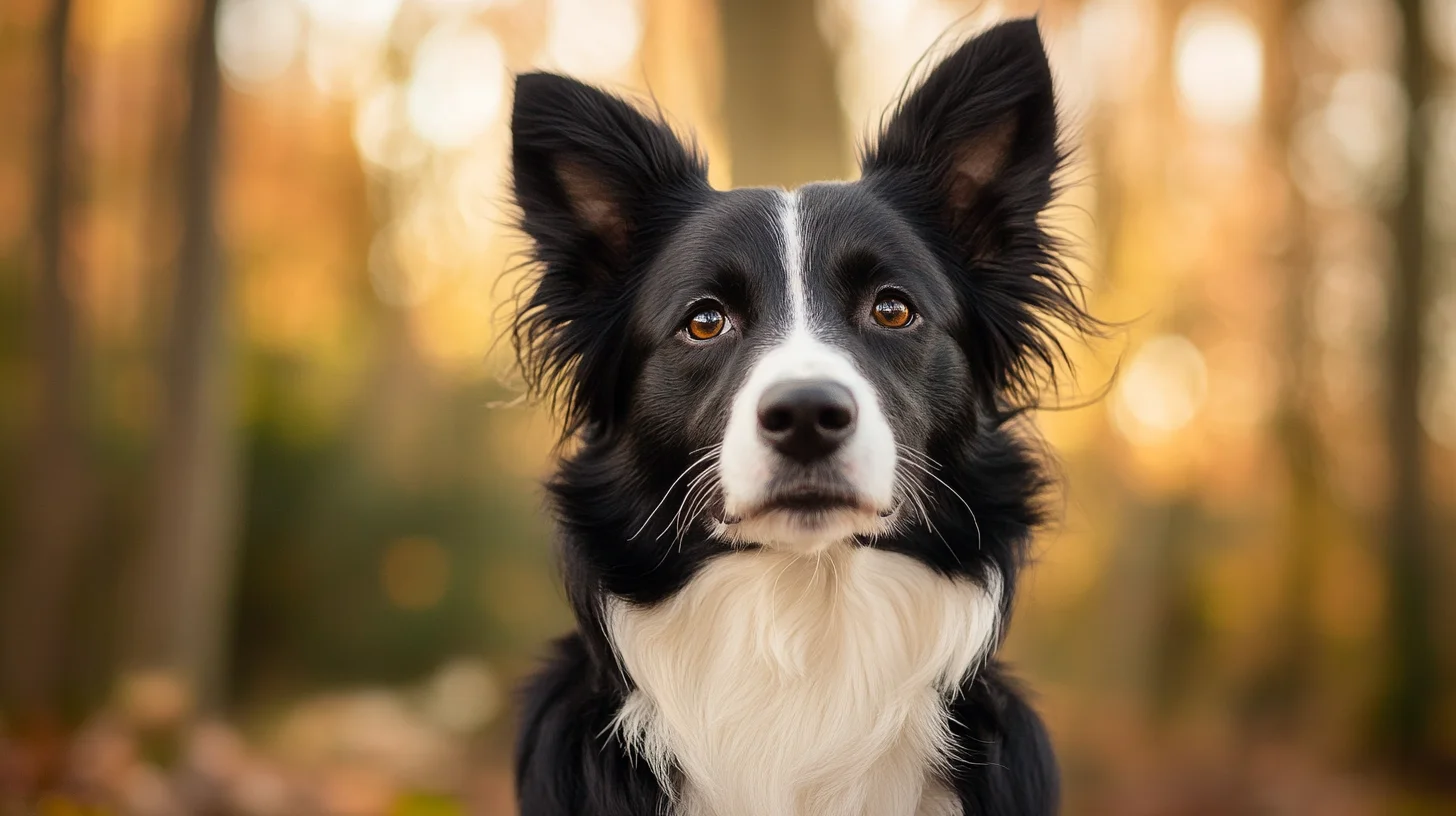
The most-asked question I get from clients before a session is: how do you get my dog to look at the camera? The camera is a strange object — a round glass eye that makes clicking sounds and occasionally flashes. Most dogs either ignore it entirely, look consistently away from it, or fixate on the squeaky toy held behind it rather than the lens itself. Here's what actually works — and why the techniques most people try on their own reliably stop working.
Novel Sounds — The Most Reliable Trigger
The single most reliable way to get the alert, ears-forward, eyes-focused expression that makes a dog portrait come alive is a sound the dog has never heard before. Dogs are hardwired to investigate novel sounds — it's a survival instinct, the same impulse that makes them freeze and orient when they hear something unfamiliar in the backyard at night.
I carry a rotation of noisemakers: specific squeaks, crinkles, rattles, high-pitched whistles, unusual vocalizations. I rotate through them strategically and reserve my best ones for the moment I need them most. The moment of first recognition — the instant before the dog has figured out what the sound is or where it's coming from — is the expression window. The ears come forward, the eyes focus, the head may tilt. It lasts about 2 seconds, sometimes less. My job is to have the camera ready and be shooting in that window before the dog habituates.
The key word is “novel.” The same squeaky toy your dog has heard a thousand times produces diminishing results. A new sound — something your dog has genuinely never encountered — produces the full alert response. This is why I don't ask clients to bring their dog's favorite toys to the session. The favorite toy is already familiar. I want unfamiliar. Unfamiliar is what produces the expression.
I also rotate sounds throughout the session, retiring each one as soon as the dog has investigated it enough to no longer find it interesting. A sound that produced a strong response at the start of the session will produce a weaker response after three or four uses. Managing the rotation — knowing when to introduce a new sound versus when a familiar one still has some response left — is a skill that develops over hundreds of sessions.
Movement From Unexpected Directions
Movement triggers the same alert response as novel sounds, and it can be used in situations where sounds have been depleted. Movement just outside the frame — to the side, from above, from an unexpected angle — causes the dog to orient toward it in the same way an unfamiliar sound does: instantly, with full attention, before they've fully processed what's happening.
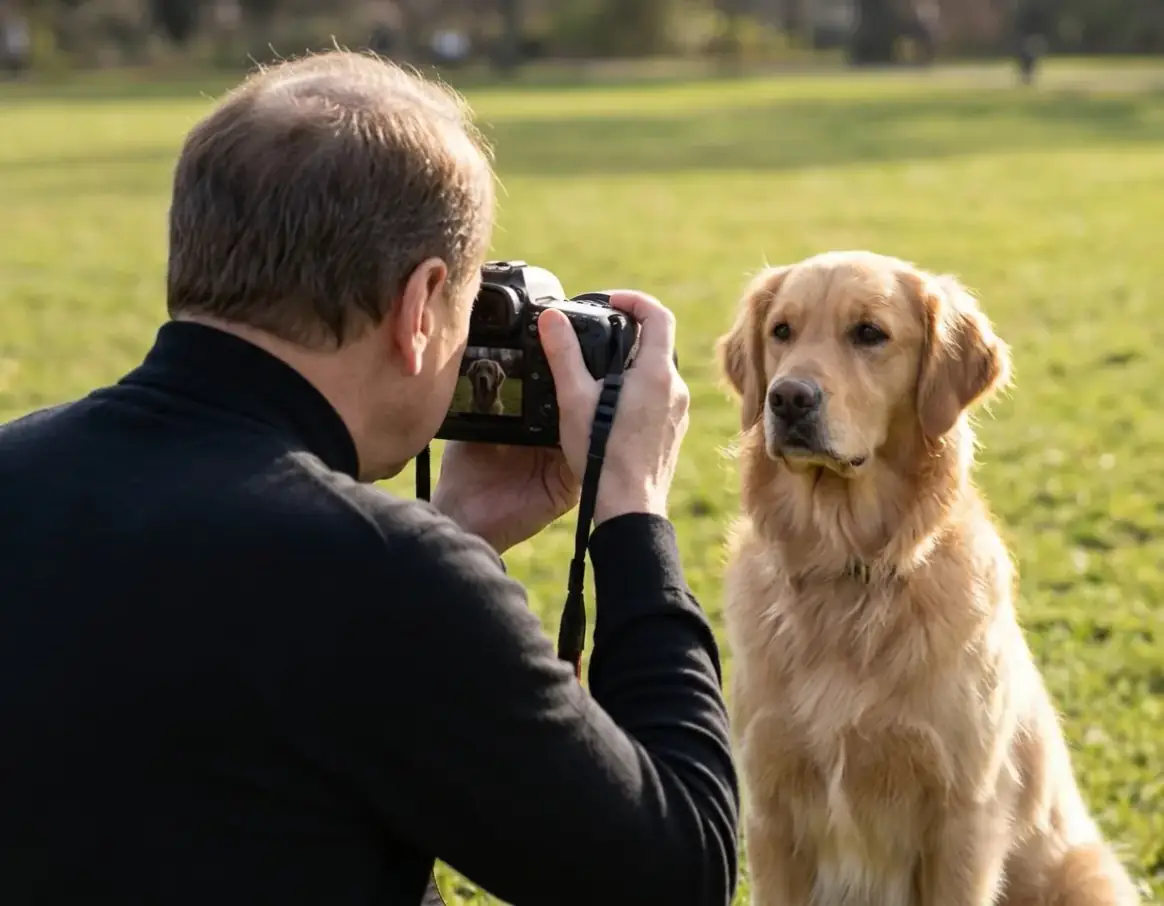
In practice, this means using handlers effectively. A handler who is positioned at the edge of my frame, slightly above the dog's eye level, wiggling something interesting — a toy, a treat, even just their hand — gives the dog something to track that puts their gaze in approximately the right direction without the dog looking directly at the handler. When the handler moves to the right position and I'm shooting from the right angle, the resulting eye direction reads as “looking at camera” even though technically the dog is looking slightly past it.
This is why having a second person present at a session is genuinely useful. I can focus on composition and timing while a handler manages the dog's attention. Two people working in coordination — one behind the lens, one managing attention direction — produce better results faster than one photographer working alone.
The Treat-and-Release Technique
This is one of my most-used techniques for getting genuine eye contact without the glassy, food-fixated stare that treat-only approaches produce. The technique works in three steps: hold a treat near the lens to get the dog focused; release the treat; shoot in the moment the dog refocuses from the treat location to my face.
Here's why it works. When a dog is focused on a treat near the camera, they're looking at the treat — their expression is intent but slightly glazed, the focus of their attention is the food rather than me. The moment after the treat is delivered, the dog briefly refocuses — they look up to see what happens next, to check in with the human, to see if more treats are coming. That refocus moment produces genuine eye contact. It's direct, engaged, alert — and it looks completely different from the treat-stare that precedes it.
The window is short — a second or two at most. I have to be shooting in burst mode, already framed up, with the focus locked, before I trigger the treat release. The timing is the skill. When it works, the resulting expression is exactly what clients are hoping for: a dog who appears to be making genuine, intelligent eye contact with the camera.
What Doesn't Work — Calling the Dog's Name Repeatedly
I ask clients not to call their dog's name more than twice in a row during a session. The reason is habituation — one of the most well-documented phenomena in animal behavior. After the second or third repetition of a familiar stimulus with no meaningful consequence, animals stop responding to it. The name becomes background noise.
“Buddy! Buddy! Buddy!” produces diminishing returns with each call. By the fourth or fifth repetition, Buddy is pointedly ignoring his name — not because he doesn't know it, but because he's learned that the repeated call doesn't mean anything interesting is about to happen. And once a dog has learned to tune out their name in a specific context, it's very hard to get them to respond to it again in that same context during the same session.
This is why I prefer novel sounds over name-calling as an attention technique. A sound the dog has never heard can't be habituated to because there's no prior history to habituate against. It's genuinely new. The name, by contrast, has been called thousands of times. It's the most familiar sound in the dog's world. That familiarity works against you when you're trying to produce the alert, fresh-attention expression.
The Look You Actually Want
Direct eye contact isn't always the best expression, and I want clients to understand this before they decide that “looking at the camera” is the only goal. Some of the best portraits I've made are of dogs doing something other than staring straight down the barrel of the lens.
The head tilt — the classic quizzical expression where the dog turns their head slightly and processes an unfamiliar sound — is one of the most endearing expressions in dog photography. It communicates curiosity, engagement, and a kind of innocent intelligence that direct eye contact doesn't always achieve. When I see a head tilt developing, I'm shooting.
The look slightly past camera — where the dog is alert and oriented toward me but their gaze is directed just to the side of the lens — often reads more natural and candid than direct eye contact. It suggests the dog is genuinely engaged with something real rather than locked onto an attention trigger. For working and herding breeds especially, this slightly offset alert gaze is often more characteristic of the dog than formal eye contact.
The open-mouth joy expression — tongue out, eyes bright, the look of a dog in full happy movement — doesn't require any particular gaze direction at all. The dog's expression is the portrait, regardless of where they're looking. Some of the most popular images I deliver to clients are the full-run, full-joy, completely-unposed moments that capture who the dog actually is rather than a formal portrait of a dog who happened to look at the camera.
If you want to know how to prepare for the session so we can make the most of all of these techniques, the guide on how to prepare your dog for a photoshoot has specific pre-session tips. And if you want to see examples of what a well-executed portrait session produces, head to the Best Dog Ever page.
Ready to see what these techniques look like in practice?
Sessions start at $395. I handle the attention work — you just need to show up with your dog.
Book a session →“It was so fun and easy to work with Chris, and our dogs loved him, too! The photos and artwork are beautiful! Highly recommend booking a session.”
About the Author
Chris McCarthyProfessional Dog Photographer · Rockland, MA · 11+ years experience
I've photographed hundreds of dogs across the South Shore and Boston since 2014 — every breed, size, age, and temperament. My own rescue, Sully, was reactive and anxious when I got him, and working with him every day taught me how to photograph dogs that other photographers find difficult. I specialize in reactive and shy dogs, seniors, and memory sessions — the sessions that matter most and need the most patience.