Photographing Two Dogs Together: How Professional Sessions Handle Multi-Dog Portraits
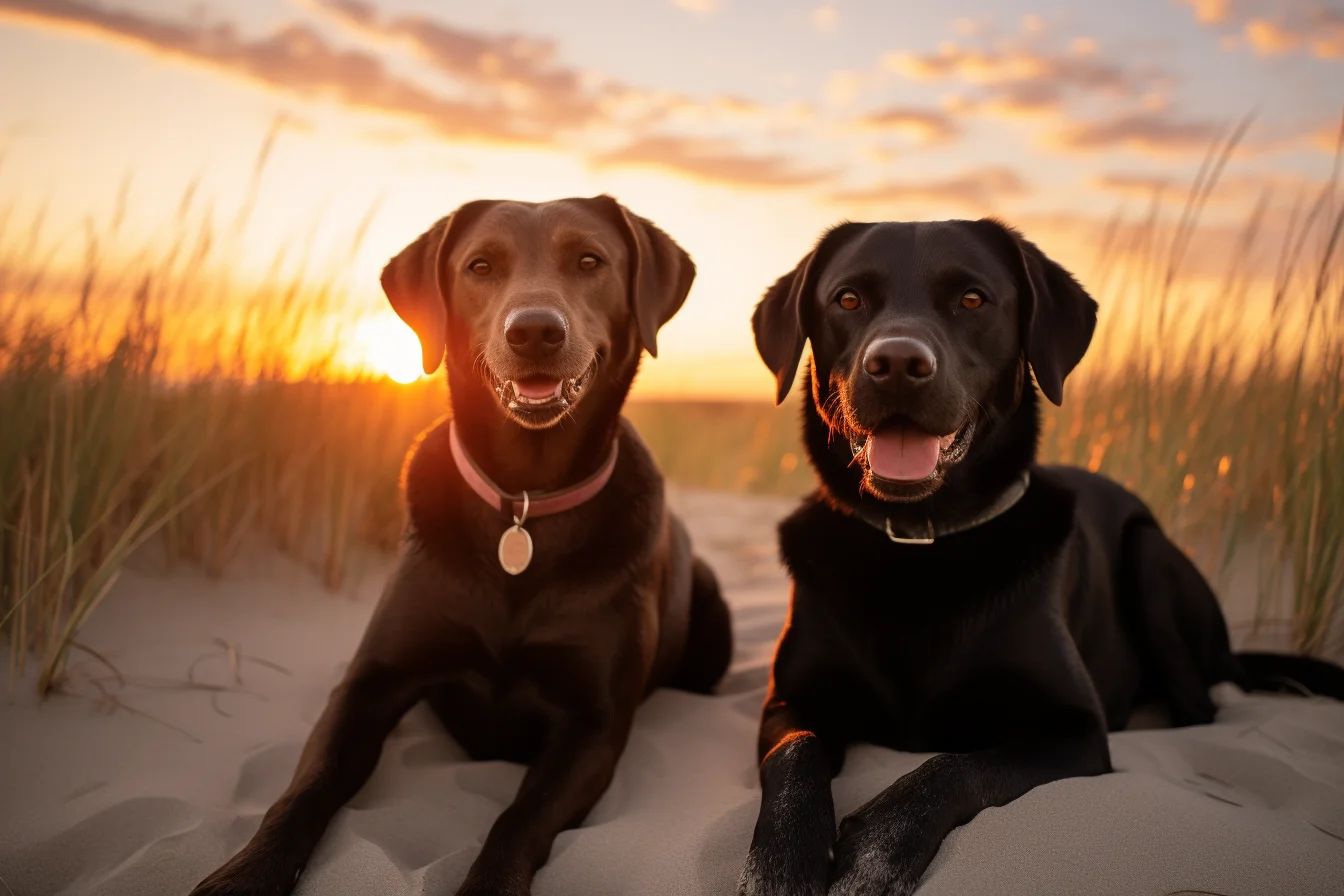
Two dogs in the same frame sounds simple. In practice, it's one of the most technically and logistically demanding things in dog photography. Not because dogs can't be photographed together — they absolutely can, and when it works, a portrait of two bonded dogs is one of the most beautiful images you can hang on a wall. It's demanding because dogs can't be told to hold a position, look the same direction, or stay in frame. Getting two of them to do it simultaneously is a matter of patience, technique, and the right preparation. I've photographed dozens of multi-dog sessions on the South Shore, from Rockland to Duxbury and everywhere in between, and the sessions that produce the most stunning joint portraits are always the ones where both the photographer and the owners come prepared.
1. Why Two Dogs Are More Than Twice as Hard
With one dog, you're tracking one set of movements, one attention direction, one set of triggers and distractions. With two, all of those variables double — but they interact. When one dog notices something interesting, it alerts the other. When one dog moves, the other often follows. When one sits, the other may step directly in front of them. They communicate with each other constantly, and that communication shapes what both of them are doing at any given moment. As a photographer, I'm not just managing two individual animals — I'm managing a system.
The mathematical reality is worth understanding. In a 60-second burst, you might have a 20% chance of Dog A being in a good position — ears up, face visible, body oriented well — and a 20% chance of Dog B being in a good position at the same time. The chance of both being in a good position simultaneously is roughly 4%, and that assumes they're behaving independently, which they're not. In practice, the probability is even lower because dogs are constantly influencing each other's behavior.
This is not a reason to be discouraged — it's a reason to understand why multi-dog sessions take more time, produce more total frames, and require a more patient approach than a single-dog session. I plan for it from the start. When I book a two-dog session here on the South Shore, I build in the additional time and set the expectation with clients upfront: we will get the joint portraits, but we'll work toward them methodically.
The payoff is real. When two bonded dogs are photographed together well — both looking in the same direction, genuine contact between them, the light falling right — the resulting portrait communicates something that no individual dog portrait can. It's about relationship. It's about two animals who share a life and a home. That's worth the extra work.
2. The Key Technique: Work Them Separately First
Every two-dog session I run follows the same structure: I always photograph each dog individually for at least 10 to 15 minutes before attempting to photograph them together. This isn't a warm-up ritual — it's doing specific work that makes the joint compositions possible.
Working each dog individually first establishes rapport between me and that dog independently. It burns off some of the initial excitement and novelty energy that every dog brings to the start of a session. It gets each dog accustomed to how I work — the camera movement, the sounds I make to get their attention, the treat delivery patterns. By the time we bring both dogs together, neither of them is experiencing the session for the first time. They've already been through the interesting part.
Working them separately also gives me essential information. I learn which dog is the more focused worker and which is the more distractible one. I learn what each dog responds to — squeaky sounds, treats held high, a specific word from their owner. I learn where each dog's energy level is and how quickly it's settling. All of that shapes how I approach the joint compositions.
There's a practical guarantee built into this approach as well: even on a session where the two-dogs-together shots are genuinely challenging — one dog is having an off day, the chemistry between them is chaotic, the light shifts unexpectedly — each dog will still have their own beautiful individual portraits. The individual work is never wasted. The joint work builds on top of it.
3. How to Position Two Dogs Together
There are a handful of compositional approaches that work reliably for two-dog portraits, and understanding them helps you visualize what we're working toward during the session.
The vertical stack is one of the most reliable compositions for dogs of different sizes: smaller dog in front, larger dog positioned behind and slightly elevated — standing on a rock, a slope, or slightly uphill terrain. This creates clear visual separation between the two subjects and shows both faces without either dog obscuring the other. For a Chihuahua and a Labrador, this is almost always where I start.
The side-by-side works beautifully for dogs of similar size, especially when they have a naturally bonded relationship. The defining moment in this composition is contact — one dog leaning against the other, shoulders touching, a head resting on the other dog's back. Natural contact between bonded dogs in a side-by-side frame is one of the most emotionally resonant compositions in dog photography. I watch for it and time my shutter around it.
A down-stay for both dogs is the most achievable position for many dog pairs, particularly if either dog has limited formal training. It lowers energy, makes staying in the frame much easier, creates natural contact opportunities when dogs are lying close together, and often produces the most relaxed, intimate-feeling portraits. Dogs in a down-stay also have less opportunity to step in front of each other.
One composition I actively avoid: placing one dog significantly in front of the other without vertical separation. The front dog will be sharp, the back dog will be soft, and the result reads as a mistake rather than an intentional choice. If both dogs need to be in the same focal plane, they need to be genuinely side by side — not one foot apart front-to-back, which creates more depth-of-field separation than most people realize.
4. What Owners Can Do to Help
Multi-dog sessions are a genuine team effort. What you do before and during the session makes a significant difference in what we can achieve together. Here is exactly what I ask of clients bringing two dogs.
Exercise both dogs before the session — not to exhaustion, but enough to take the edge off excess energy. A 20-minute walk before arriving at the location is usually right. Dogs who arrive wound up from sitting in a car and then being unloaded into an exciting outdoor location spend the first 10 minutes of a session decompressing rather than working. You want that decompression to happen before you arrive.
Bring a handler for each dog. This is the single most impactful thing you can do for a two-dog session. One handler per dog means each dog gets dedicated attention, independent positioning, and focused engagement. When one person is managing two dogs simultaneously, the dogs inevitably drift into each other's space, compete for attention, and create compositional chaos. Two handlers changes everything.
Bring multiple treat types. Different dogs have different motivators, and what engages Dog A may produce complete indifference from Dog B. I want to be able to deliver independent engagement from each dog, which means having independent motivation for each. High-value, smelly treats — real meat, cheese — tend to work best, but bring what you know works for each of your dogs specifically.
Tell me which dog is likely to be the challenge. In almost every multi-dog session, one dog is relatively straightforward and one is the variable — more distractible, more reactive, less treat-motivated, more likely to be the one moving when the other sits. Knowing in advance which dog is which lets me plan my attention and energy accordingly. There's no judgment in the answer — it's just information that helps me do my job better.
5. Leashes, Editing, and What to Expect in Your Final Gallery
As with all of my sessions, leashes remain on throughout for safety and control — this is true even for the most reliably obedient dogs, and especially true when two dogs are working together in a location with distractions. All leashes are removed in post-processing from the final images. This is standard practice and something clients should never worry about.
For two-dog sessions, the leash-removal editing step is more involved than for single-dog sessions. Leashes may cross each other, be held by two different handlers who are standing in different positions, or be visible in more complex arrangements depending on how the dogs are positioned. This is expected, it's accounted for in my editing workflow, and it adds time to post-processing — but it does not change the final result. Your images will arrive clean.
In terms of what to expect from the gallery itself: a two-dog session typically produces more total individual portraits of each dog than a single-dog session would, because I spend dedicated solo time with each dog. For joint portraits, expect 4 to 8 strong compositions in the final gallery — images where both dogs are well-positioned, both faces are visible, and the light is working. On great sessions, that number is higher. The joint images are fewer than the individual images proportionally, but they are typically the ones clients choose for wall prints.
The package price for a Best Dog Ever session is the same regardless of the number of dogs. Multiple dogs may require a slightly longer session to work through all the compositions we need, but the price doesn't change based on dog count (additional people or pets beyond the included two are $50 each).
6. FAQ: Multi-Dog Portrait Sessions
What if one of my dogs is reactive to the other in certain situations?
This is more common than people think, and it doesn't disqualify a two-dog session at all. Tell me in advance — what the trigger is, how the dogs typically behave around it, and what their relationship is like at home. We'll build the session structure around managing those triggers: working them separately for longer, choosing a location with more space and fewer tight quarters, using the right positioning to keep both dogs comfortable, and knowing in real time when a joint composition is working versus when it's creating stress. I'd always rather have this conversation before the session than discover it on location.
My dogs never look at the same place at the same time. Is this a problem?
It's completely normal, and I anticipate it. The techniques I use — independent handlers creating separate attention points, staggered treat delivery that syncs their focus, timing triggers at the right moment — are specifically designed to synchronize their attention for the critical seconds the shutter needs. It doesn't happen on every frame. It happens on enough frames, with enough patience, that we always walk away with strong joint images.
Can you photograph three or more dogs together?
Yes, though the complexity scales quickly. Three dogs can absolutely be photographed together — I've done it — but it requires three dedicated handlers, strong individual obedience from each dog, and honest expectations about the proportion of joint compositions versus individual portraits in the final gallery. Three dogs in a frame simultaneously, all looking good, is genuinely rare footage. When it happens, it's spectacular. I recommend reaching out to discuss the specifics before booking a three-or-more session so we can plan accordingly.
Pro Tip
“The best two-dog portrait often isn't the one where both dogs are looking directly at the camera. Some of the most beautiful joint portraits I've made show both dogs oriented toward the same interesting thing off-camera, or one dog looking at the lens while the other looks at them. Natural interaction between bonded dogs — one licking the other's ear, one leaning a chin on the other's back — often beats a formal posed two-dog sit-stay. I watch for those moments throughout the session because they can't be staged. They just happen, briefly, and my job is to be ready when they do.”
Two-Dog Sessions Are Some of My Favorites
There's something genuinely special about photographing two dogs who share a life together. When it comes together — both of them in the frame, the light right, genuine connection between them — the resulting portrait is unlike anything else. Get in touch to discuss your dogs, their relationship, and what will make their joint portrait meaningful.
Whether you're booking a Best Dog Ever session for two dogs or have questions about how a multi-dog session works, I'm happy to talk through the details before you book.
Keep Reading
SESSION TIPS
How to Prepare Your Dog for a Professional Photoshoot
Six expert tips to help you get stunning, natural results from your dog's photo session...
BOOKING GUIDE
What to Expect at Your First Professional Dog Photography Session
Here's exactly what happens from booking to receiving your final gallery...
MULTI-DOG
Photographing Three or More Dogs Together
What changes when you add a third and fourth dog — staging, handlers, and why the logic shifts beyond two...
“It was so fun and easy to work with Chris, and our dogs loved him, too! The photos and artwork are beautiful! Highly recommend booking a session.”
About the Author
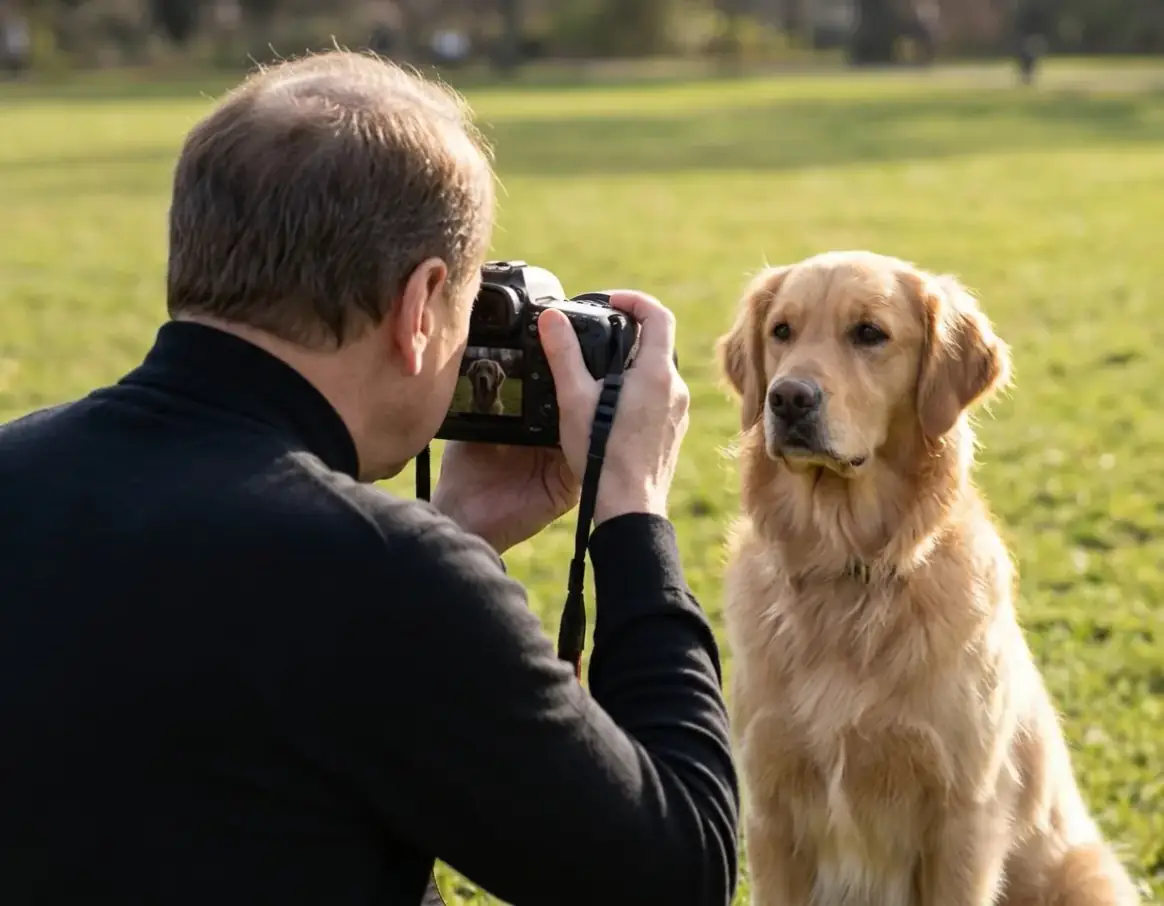
Chris McCarthyProfessional Dog Photographer · Rockland, MA · 11+ years experience
I've photographed hundreds of dogs across the South Shore and Greater Boston since 2014 — every breed, size, age, and temperament. My own rescue, Sully, was reactive and anxious when I got him, and working with him every day taught me how to photograph dogs that other photographers find difficult. I specialize in reactive and shy dogs, seniors, and memory sessions — the sessions that matter most and need the most patience.