Working Breed Dog Photography on the South Shore
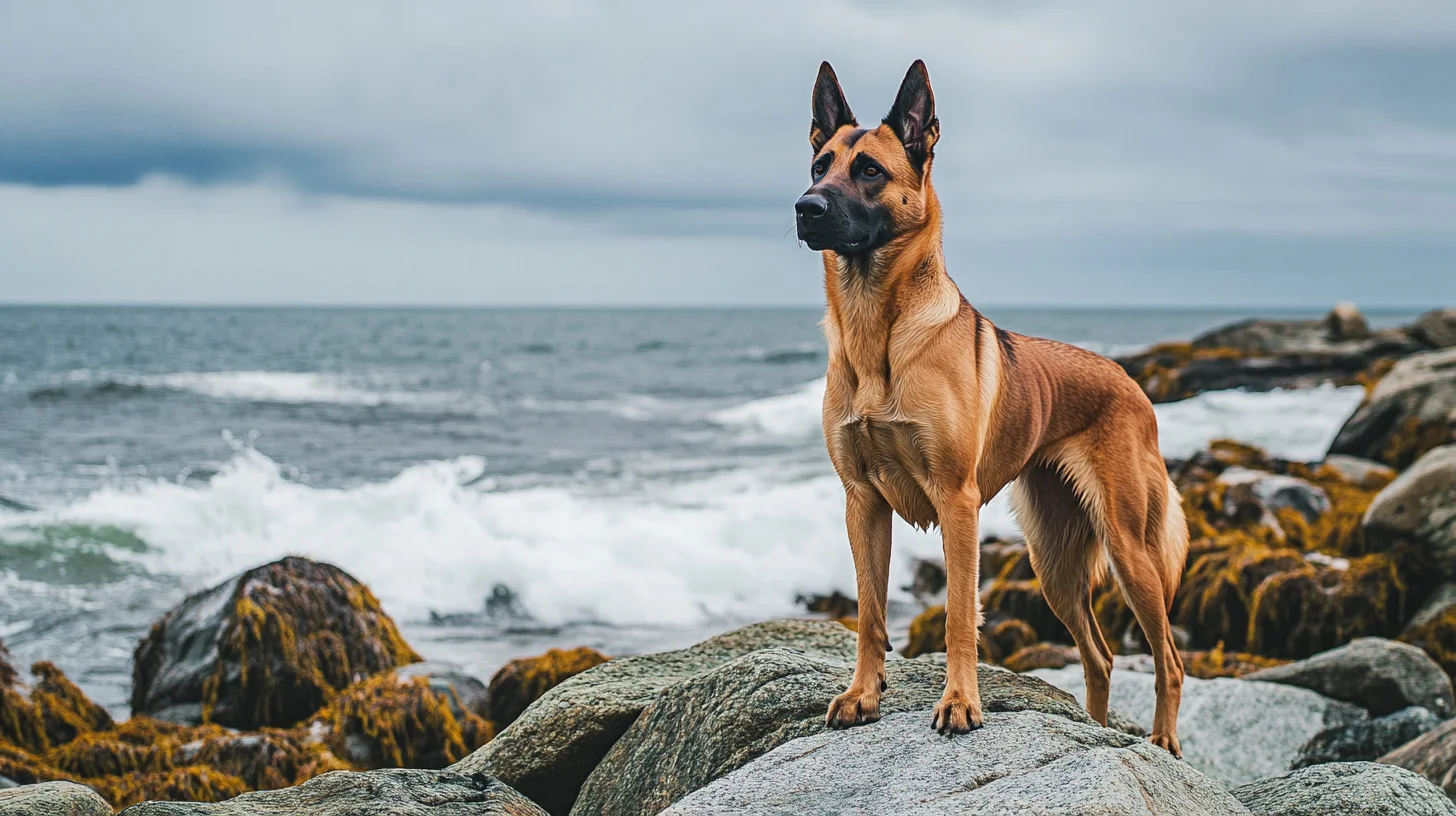
Working breeds — herding dogs, hunting dogs, guardian dogs, sporting dogs — share a set of traits that make them both rewarding and demanding to photograph. They're intelligent, responsive, and driven. They pay attention to everything. They have opinions about what's interesting and what isn't, and they don't pretend otherwise. When you can channel that attentiveness into the portrait, the results are unlike anything you get from a more relaxed breed. The challenge is getting there.
The Working Dog Mindset — Using the Drive
Working breeds are always scanning, always processing. Their eyes are rarely still. They notice the rabbit at 200 yards, the sound of a child around a corner, the subtle change in their handler's body language before any command is given. This is what they were bred for — a heightened awareness of their environment that makes them excellent at their jobs and, from a photography standpoint, slightly more difficult to manage than a breed who is content to sit and look pleasant.
The technique that works with working breeds is creating a task rather than trying to redirect attention away from distractions. “Look at me” is a command that asks a working dog to disengage from their environment. “Figure out what that sound is” is a task that uses their natural drive and produces the expression you actually want — the alert, forward-focused, fully-engaged look that defines these breeds.
The working dog brain engages with a puzzle in a way that produces the alert, intense expression these breeds are known for. When a Border Collie is trying to identify a novel sound, or a German Shepherd is processing an unfamiliar scent, or a Vizsla is pointing at something moving in the grass, they look exactly like themselves — not like a dog being photographed, but like a dog doing what they were bred to do. That's the portrait.
The practical implication for session planning is that working breed sessions require more active engagement from me throughout the session. I can't set up a good composition and wait for the dog to settle into it — a working breed will have moved on to the next interesting thing before the shutter fires. I have to be ready to shoot at any moment, which means the composition has to be established first and the attention technique deployed second, in rapid succession.
German Shepherds — The Intelligence Portrait
GSDs need a job during the session. A German Shepherd who has nothing to do is a German Shepherd who is going to create their own agenda, and that agenda usually involves investigating every interesting thing in the surrounding area rather than looking at the camera. The solution is to give them something to do from the start.
I use directional tasks — position them, ask them to hold, work the distance. A GSD who is asked to hold a position at a specific distance while I approach from different angles is engaged in a task. Their focus is on the task, which means their expression is focused. The ears come forward. The eyes track. The slight forward lean — the body language of a dog who is paying attention and ready to respond — is exactly the expression that makes a GSD portrait exceptional.
The focused, attentive GSD expression — ears forward, eyes locked, that characteristic slight lean toward something interesting — is one of the best expressions in dog photography. It communicates intelligence, alertness, and the unmistakable quality of a dog who is fully present. Getting there requires giving the dog a reason to be alert rather than a command to look at a lens.
For more on working specifically with German Shepherds, see the German Shepherd photographer South Shore page.
Border Collies — The Stare
No other breed produces the herding stare. The low head, the locked gaze, the complete stillness before the burst of movement — it's a behavior pattern that is so specific to Border Collies that it has its own name in herding circles: the “eye.” When a Border Collie locks onto something with the herding eye, they become temporarily impervious to distraction. They are completely, utterly focused.
Triggering this response requires something to herd — specifically, movement at distance that activates the instinct. I use a variety of movement triggers: a ball rolled in a specific direction, a handler moving away from the dog at the right pace, even a specific type of movement on my part that suggests to the dog's instinct that something is about to need herding. When the stare locks in, I'm shooting continuously. The expression is extraordinary — intense, focused, fully alive with purpose.
Border Collies also produce excellent motion portraits because of the explosive transition between the herding stare and full-speed pursuit. That transition — the moment the still becomes a sprint — is one of the most dynamic and energetic sequences in dog photography. I plan sessions with Border Collies to include both: the meditative intensity of the stare and the full-speed kinetic joy of the run.
For breed-specific detail, the Border Collie photographer South Shore page goes deeper on what these sessions look like.
Vizslas, Weimaraners, and Sporting Breeds — Motion and Stillness
Sporting breeds alternate between two distinct modes: intense, focused stillness — the point, the lock, the held breath before the flush — and explosive, full-body movement. Both modes are photogenic. Both define what these breeds are. And both require different shooting approaches.
I plan sessions with Vizslas, Weimaraners, and similar sporting breeds to include locations with room to run and areas suited to the focused portrait work. The motion sequences — a Vizsla at full gallop, a Weimaraner mid-leap, a pointing dog frozen in the hold — require space and a backdrop that doesn't compete with the subject. Open meadows, long stretches of beach, the edges of marshes.
The portrait work for sporting breeds often happens best when the dog has had a chance to run first. After 10 minutes of full-speed movement, a sporting breed will often settle into a more focused, composed state that is ideal for portrait work. The energy has been spent; the dog is engaged but not frenetic. That's the window.
Vizslas in particular have a quality of expression — warm, sensitive, fully attentive — that makes them exceptional portrait subjects when the conditions are right. The velvet-over-muscle quality of the Vizsla coat in good light is one of my favorite things to photograph on the South Shore.
Location Choices for Working Breeds
Open terrain is essential for working breed sessions. These dogs are built for wide spaces — for sight lines that stretch out, for room to move, for environments that don't press in on them. Enclosed, crowded environments make working breeds uncomfortable, which shows in their expression and body language. I avoid narrow trails, busy parks with lots of foot traffic, and locations with visual clutter that competes with the dog.
Borderland State Park in Easton is excellent for working breeds — rolling open meadows with good sight lines and minimal crowd pressure. World's End in Hingham combines elevation changes, open ocean views, and varied terrain that gives these dogs something interesting to engage with at every point in the session. The coastal meadows at Duxbury and the marshes along the Scituate coast provide the kind of wide-open, low-stimulation environment that lets the natural alertness of working breeds express itself without tipping into overstimulation.
Early morning timing matters even more for working breeds than for other types of dogs. Before the trails get busy, before the distractions stack up, working breeds are more manageable and their natural focus is easier to direct. An early morning session at World's End with a German Shepherd or a Border Collie, in golden hour light across open terrain — that's the conditions that produce the best work.
For a full guide to South Shore locations that work well for these sessions, see the best dog photo locations on the South Shore. For a broader look at what a professional session involves, the Best Dog Ever page covers the full session experience.
Have a working breed you'd like to photograph?
Sessions start at $395. I work with herding dogs, sporting dogs, guardian breeds, and everything in between across the South Shore.
Book a session →Related guide: Rottweiler Photography on the South Shore — working-breed photography — black-and-tan rottweiler portraits.
“It was so fun and easy to work with Chris, and our dogs loved him, too! The photos and artwork are beautiful! Highly recommend booking a session.”
Looking for activities your working breed can actually do? See working dog activities in New England.
About the Author
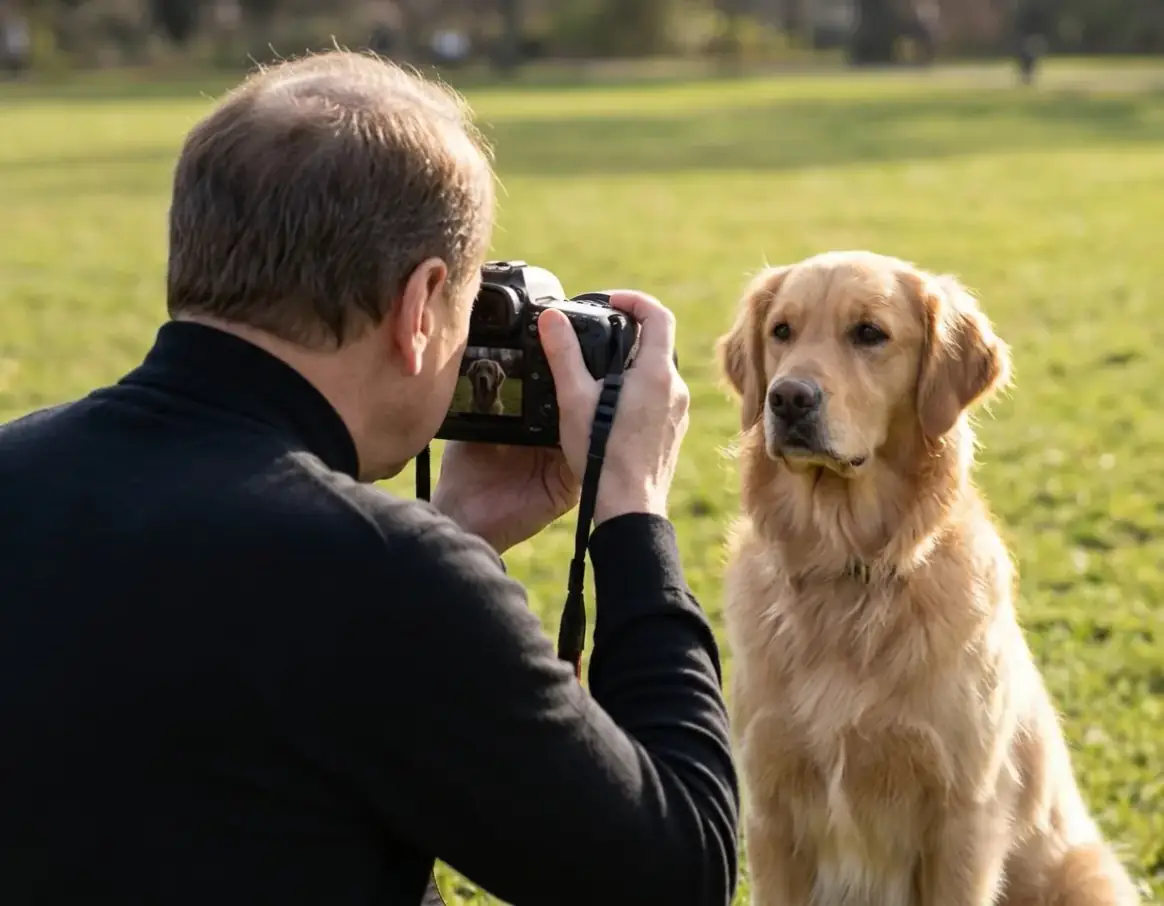
Chris McCarthyProfessional Dog Photographer · Rockland, MA · 11+ years experience
I've photographed hundreds of dogs across the South Shore and Boston since 2014 — every breed, size, age, and temperament. My own rescue, Sully, was reactive and anxious when I got him, and working with him every day taught me how to photograph dogs that other photographers find difficult. I specialize in reactive and shy dogs, seniors, and memory sessions — the sessions that matter most and need the most patience.