Indoor vs. Outdoor Dog Photography: How to Choose
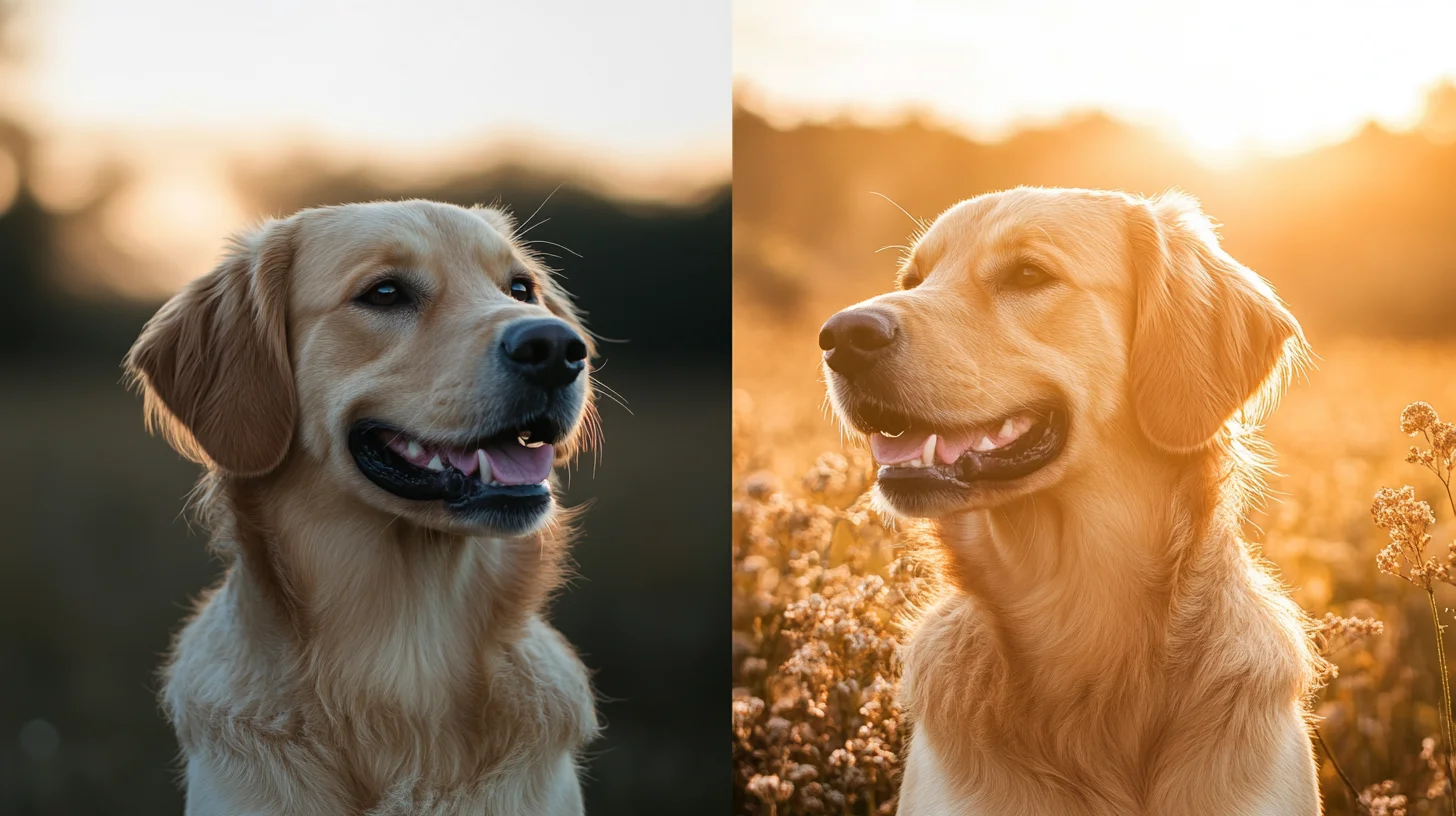
The most common question I get from new clients isn't about location or price. It's about whether to do a studio session or go outdoors. The honest answer is that neither is better — they're different tools for different dogs, different goals, and different aesthetics. What I've learned after years of photographing dogs across both environments is that the choice almost always becomes obvious once we talk through a few key questions.
Before I give my standard breakdown, let me say this: the most important variable in any session isn't the location. It's the dog. A session that pushes an anxious dog into an environment that overstimulates them produces stressed portraits no matter how beautiful the backdrop. A session that puts a confident, athletic dog in a controlled studio environment can feel like putting a race car on a parking lot — technically fine, but not quite right. Matching environment to dog is the first decision, and it informs everything else.
When the Studio Makes More Sense
There are specific categories of dogs where I consistently recommend starting with a studio session, and the reasons are practical rather than aesthetic.
Reactive or anxious dogs do better in a controlled, predictable environment. At the Rockland studio, I control every variable: the sounds, the people present, the temperature, the level of stimulation. There are no passing dogs, no unexpected bicycles, no startling sounds. For a dog that struggles in novel outdoor environments, the studio lets them settle and show their actual personality rather than their stress response.
Senior dogs with mobility limitations often can't navigate trails comfortably, and pushing them to do so produces portraits of tired, uncomfortable animals rather than the dignified, soulful portraits that senior dogs deserve. The studio floor with a comfortable surface and minimal walking distance is a much better environment for an older dog with joint issues.
Flat-faced breeds — Bulldogs, French Bulldogs, Pugs, Boston Terriers — have respiratory limitations that make outdoor summer sessions genuinely risky. I won't do outdoor summer sessions with brachycephalic breeds in warm weather. The studio with climate control is the right choice. The same applies to any breed with heat sensitivity. Winter outdoor sessions are more feasible for these dogs, but the studio remains a comfortable fallback year-round.
Puppies who haven't completed their vaccination series should avoid high-traffic dog areas and public parks. Studio sessions eliminate exposure risk entirely and let you document that early puppy window — the enormous paws, the puppy belly, the expressions of pure wonder — in a safe, controlled environment. For more about studio sessions, see my Massachusetts studio dog photography page.
When Outdoor Sessions Are the Better Choice
Active, athletic dogs — Labs, Vizslas, Weimaraners, Border Collies, Australian Shepherds — look best when they have space and movement. These dogs have a kinetic quality to them that studio portraits can't fully capture. Outdoor sessions let me photograph them in motion, in terrain that suits their build, doing what they do naturally. The results feel alive in a way that studio portraits of high-energy dogs rarely do.
Dogs with dramatic coats — Bernese Mountain Dogs, Huskies, Great Pyrenees, Australian Shepherds — are shown at their full visual best in natural settings. The interplay of coat pattern against natural backgrounds, the way outdoor light catches fur texture, the scale of a large dog against an open landscape — these are things the studio can approximate but never fully match.
Families who want to be in the photos benefit enormously from the variety of outdoor scenery. A family portrait with a dog in front of fall foliage at Borderland State Park, or against the harbor backdrop at World's End, tells a story about place and season that a studio backdrop cannot. If the “we are here, in this season, with this dog” quality is important to you, outdoor is the right call.
Clients who want seasonal imagery — spring wildflowers, fall foliage, winter snow, summer beach — obviously need outdoor sessions. These are environmental conditions that can't be replicated inside, and they're often the primary reason clients book at specific times of year.
The Light Question
This is the part of the decision that most clients don't think about until I raise it, and it matters more than almost anything else.
Studio light is controllable, consistent, and repeatable. I can get a specific look — clean highlights, controlled shadows, a particular rendering of coat texture — regardless of weather, time of day, or season. If you need to reschedule, the light will be identical when you do. Studio light produces portraits with a polished, intentional quality. It's the right choice when you want control over the final aesthetic.
Outdoor light at golden hour is a different category entirely. The warmth, the dimensional quality, the way it wraps around a dog's coat and separates them from the background — it's warmer and more dramatic than almost any studio setup, but it requires precise timing, weather cooperation, and a 45-minute window per day. When it comes together — a cooperative dog, a beautiful location, golden hour light in the right season — the results are transcendent. Not better than studio, exactly. Categorically different.
Studio is reliable; outdoor golden hour is transcendent when it happens. Knowing which quality you're optimizing for is part of making the right choice.
What About Reactive Dogs Outdoors?
Not all reactive dogs are automatically studio candidates, and I want to be clear about that because it's a common misconception. Many reactive dogs do beautifully outdoors in the right location — quiet, low-traffic parks where they have space to settle and time to decompress before the camera comes out.
I've photographed reactive dogs at Ames Nowell State Park on early weekday mornings when the park is nearly empty. I've done excellent sessions with reactive dogs at Borderland State Park on the quieter trail sections away from the main parking lot. The Norwell conservation areas can work well for dogs who need space and minimal exposure to strangers. The key is choosing the right location, going at the right time, and being willing to let the dog set the pace.
For clients with reactive dogs, I always recommend a consultation before booking so we can discuss the dog's specific triggers and history. That conversation usually makes clear whether studio or a carefully selected outdoor location is the better starting point. My reactive dog photography page goes into more detail about how I approach these sessions.
Making the Decision
I always ask clients three questions before recommending indoor or outdoor. The answers almost always make the decision clear.
First: How does your dog handle new environments and strangers? A dog that's generally relaxed and curious in new places is a good outdoor candidate. A dog that needs significant time to settle in new environments, or that becomes reactive when stressed, is often better served by the predictability of the studio — at least for a first session.
Second: What aesthetic are you going for? Clean, polished, timeless portraits that will look as good on a wall in twenty years as they do today — studio. Portraits that capture a specific season, a specific place, a specific moment in the dog's life in the context of where you live — outdoor. Neither is wrong. They're genuinely different artistic goals.
Third: What's the season and weather likely to be? Spring and fall outdoor sessions are almost always worth pursuing if the dog can handle it. Summer outdoor sessions work well for water-loving dogs and those with heat tolerance, but require early morning timing and careful location selection. Winter outdoor sessions are beautiful for dogs that can handle cold, and the low winter light has a quality that's worth pursuing. If the timing is wrong for outdoor and you don't want to wait, studio is always ready.
If you're still unsure after reading this, the best thing to do is reach out and describe your dog — their temperament, their history, what you're hoping to capture. That conversation is where the decision usually becomes obvious. You can learn more about the full Best Dog Ever session experience, or read about what to expect from a professional dog photography session before you decide.
Not sure which type of session is right for your dog?
Sessions start at $395. I'll help you pick the right location and time for your dog.
“I cannot begin to describe how impressed and in love my husband and I are with Chris and his art! He showed up with a huge smile and amazing energy. Our pictures are out of this world.”
About the Author
Chris McCarthyProfessional Dog Photographer · Rockland, MA · 11+ years experience
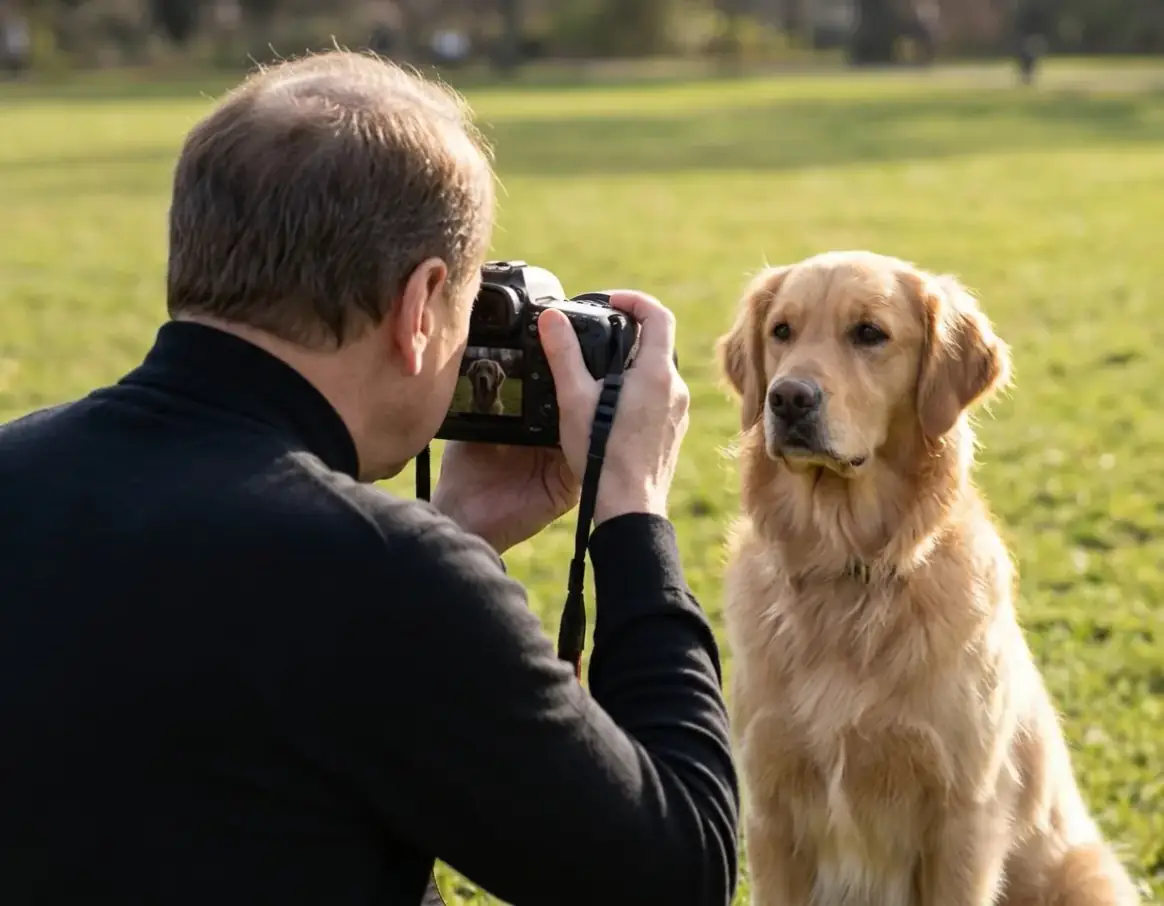
I've photographed hundreds of dogs across the South Shore and Boston since 2014 — every breed, size, age, and temperament. My own rescue, Sully, was reactive and anxious when I got him, and working with him every day taught me how to photograph dogs that other photographers find difficult. I specialize in reactive and shy dogs, seniors, and memory sessions — the sessions that matter most and need the most patience.